


More than 150 exhibitors with specialised defence-related offerings addressed the pressing needs of an international professional audience from procurement, research and technology (R&T), and the defence industry. Altogether, Techtextil and Texprocess welcomed more than 36,000 visitors and 1,700 exhibitors from 112 countries. The two leading trade fairs brought together all the textile components and production stages involved in creating ready-to-use protective systems. In practice, supply security depends on the seamless integration of fibres, yarns, narrow textiles, finishes and processing expertise.
“In the defence sector in particular, what matters is whether innovations function reliably in practice, are consistently available and can be processed at scalable production volumes. Techtextil provides the ideal platform for this. It brings together the partners who transform material expertise into deployable solutions,” says Sabine Scharrer, Director Brand Management Technical Textiles & Textile Processing, Messe Frankfurt.
From specification to protective performance
Modern protective textiles must meet several strict requirements simultaneously: from IR signature management, heat and chemical protection to mechanical durability as well as wash resistance. Even hook-and-loop systems, sewing threads and elastic bands must withstand extreme mechanical stress while supporting IR remission properties.
If manufacturers optimise these parameters individually, this comes at the expense of weight, moisture vapour resistance or wearing comfort. Yet these factors directly influence the endurance and operational effectiveness of deployed personnel. Effective protective systems therefore depend on the precisely coordinated interaction of numerous specialised components. This makes a platform such as Techtextil, which brings together all relevant technologies and partners in one place, particularly valuable.
“Technical textiles cannot be reduced to isolated performance indicators. In protective clothing, the decisive factor is the interaction between material, the human body and the operational scenario,” says Dr. Simon Annaheim, Empa. “Simulations can help pre-select materials more effectively and shorten development cycles. However, practical validation remains indispensable.”
The phase-out of PFAS adds to the complexity. Water-, oil- and dirt-repellent finishes remain relevant for many protective applications. Oil repellency in particular – as required in many procurement specifications – is difficult to replace with equivalent performance depending on the operational profile. At Techtextil 2026, technical buyers, development managers, material experts and system suppliers were able to discuss these complex requirements directly with specialists in material development, testing and industrial processing, gaining insights and developing practical solutions. The new “Textile Chemicals & Dyes” segment further strengthened the connection between chemical precursors, textile applications and processing.
Meeting point for a resilient defence supply chain
The defence market is facing increasing pressure to geographically consolidate the sourcing of security-critical products. At the same time, high energy prices, bureaucracy and global price disparities challenge manufacturing in regions such as Europe. In addition to alternative sources of materials like fibres, yarns and finishes, there is particular need for reliable partners capable of jointly developing future-proof approaches for material selection, finishing and processing.
As specialised technological expertise is distributed across countless stakeholders, gaining a comprehensive market overview requires a dedicated industry platform. In Frankfurt, defence system integrators, garment manufacturers and technical buyers met the partners they need to specify, source and scale protective solutions for serial production. Established suppliers used the leading trade fairs strategically to identify suitable development, production and supply partners. For companies expanding their portfolios towards defence applications, Techtextil served as a guide in a market that demands in-depth knowledge of standards, procurement expertise and proven references.
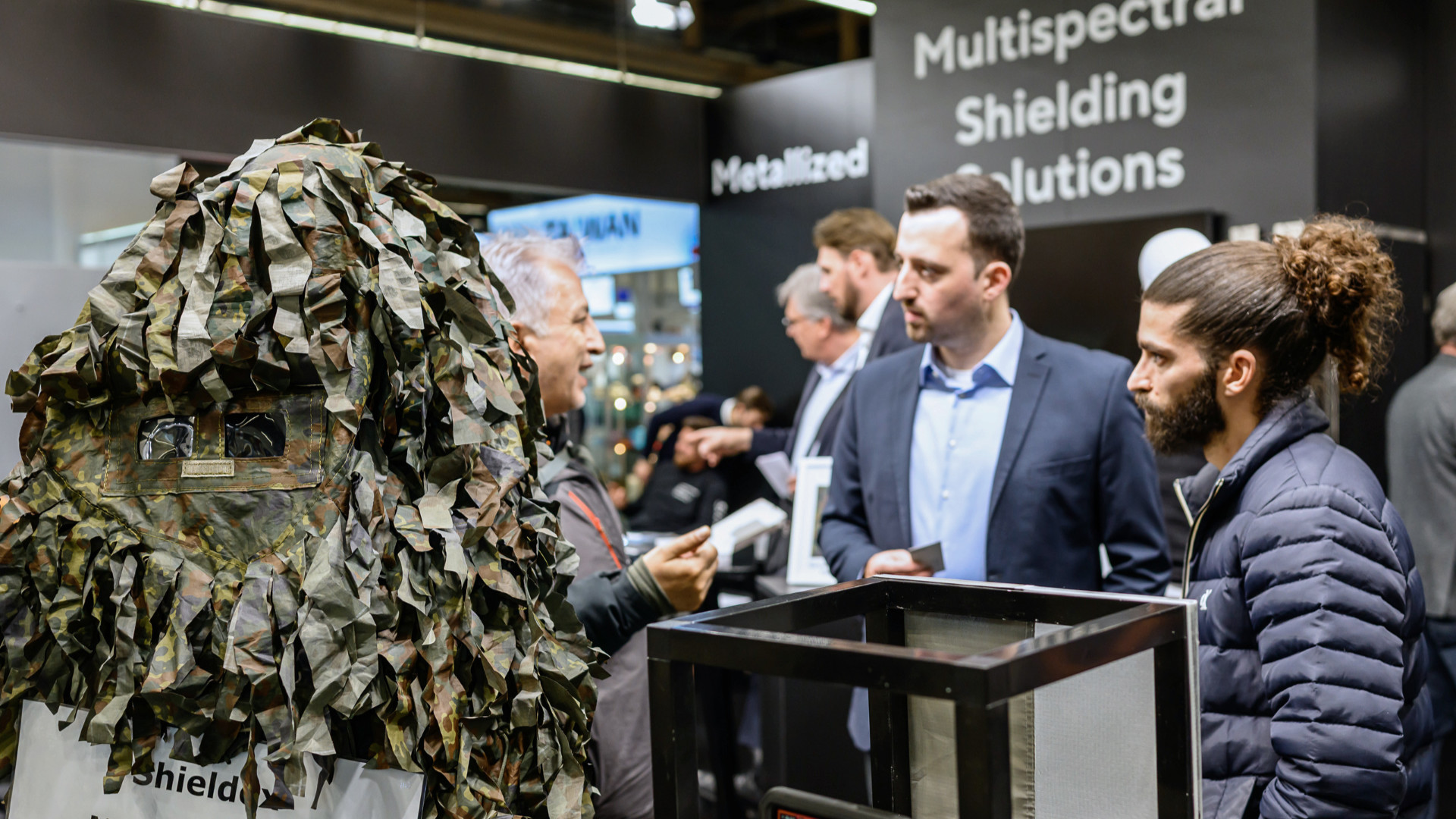
The leading trade fairs Techtextil & Texprocess brought together stakeholders from across the entire protective textiles supply chain in Frankfurt from 21 to 24 April 2026.
Press information and photographic material:
https://techtextil.messefrankfurt.com/frankfurt/en/press.html
https://texprocess.messefrankfurt.com/frankfurt/en/press.html
Social Media:
www.linkedin.com/showcase/techtextil
www.linkedin.com/showcase/texprocess

Background information on Messe Frankfurt: https://www.messefrankfurt.com/frankfurt/en/press/boilerplate
Sustainability at Messe Frankfurt: https://www.messefrankfurt.com/sustainability-information