
Shear frame testing system for tensile load on textile semi-finished products and fibre-reinforced composites
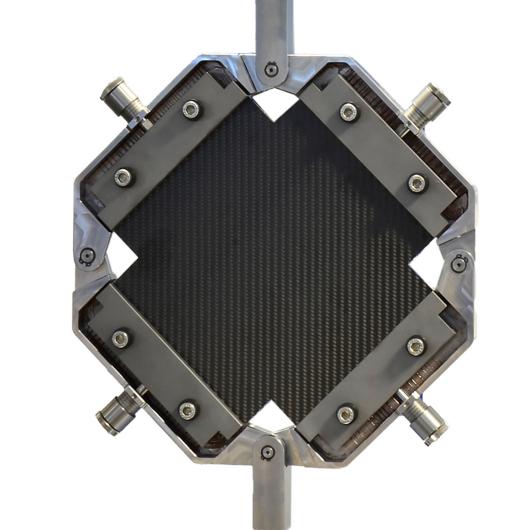
Shear frame testing system for tensile load on textile semi-finished products and fibre-reinforced composites
Description
Application
- Investigation of dry textiles and textile-reinforced plastics (e.g. prepregs or organosheets) with different types of bonding
By using the shearing device and evaluating of the shear force vs. shear angle diagrams it is possible to make statements about the expected deformability of materials. These are relevant for example for draping, which is a manufacturing process where flat semi-finished products are applied to curved surfaces.
Use
- Characterization of material properties at different temperatures
- Determination of the parameters limit angle and critical shear angle
- Optimization of manufacturing processes by evaluation of material behavior
Advantages
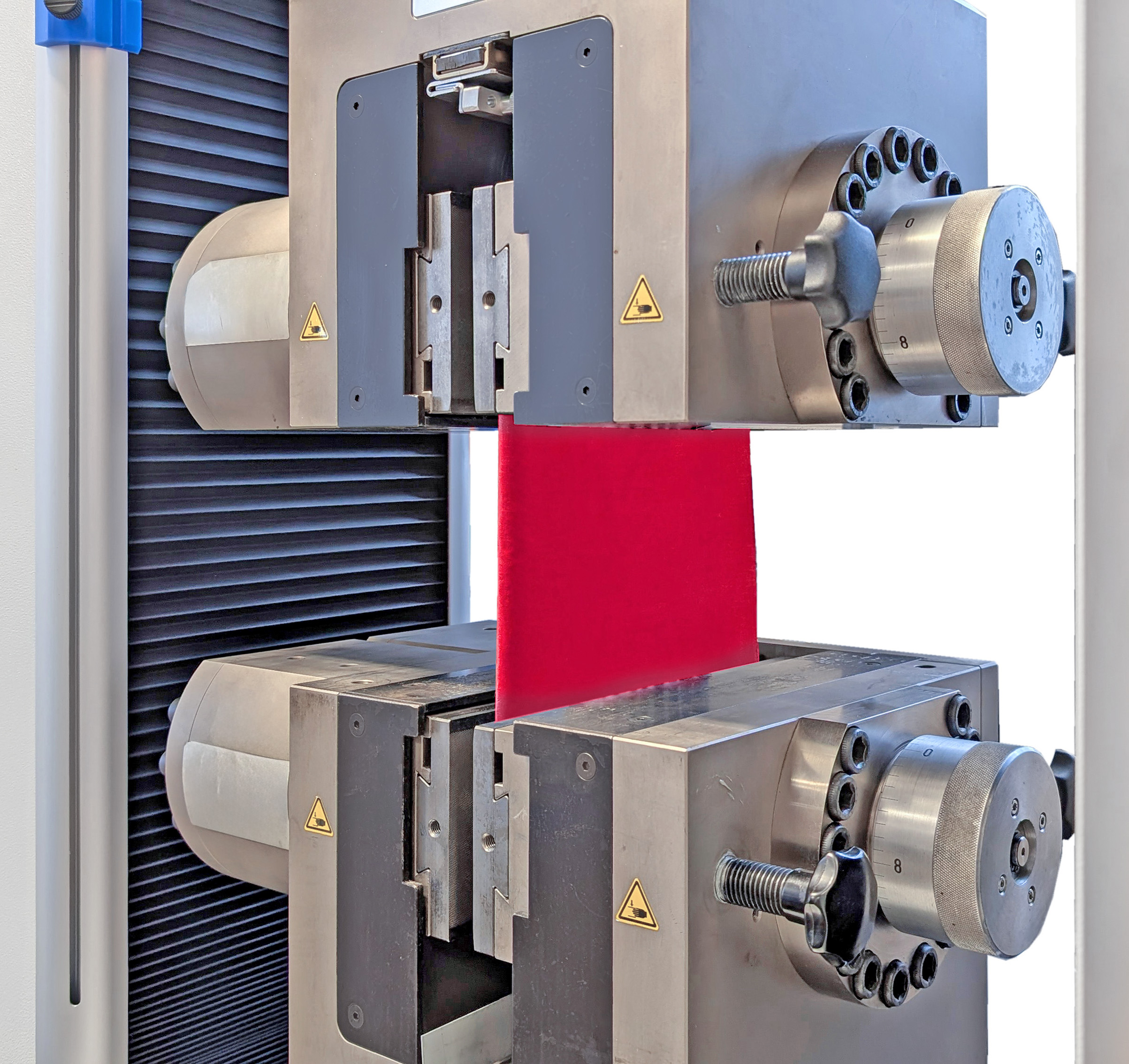
- Efficient clamping, so that the specimens do not slip out of the grips and no damage occurs at the transition to the clamping area
- Application of defined preloads up to 200 N
- Low-friction mechanics under all ambient conditions for high measuring accuracy
- High stiffness and strength
Test description
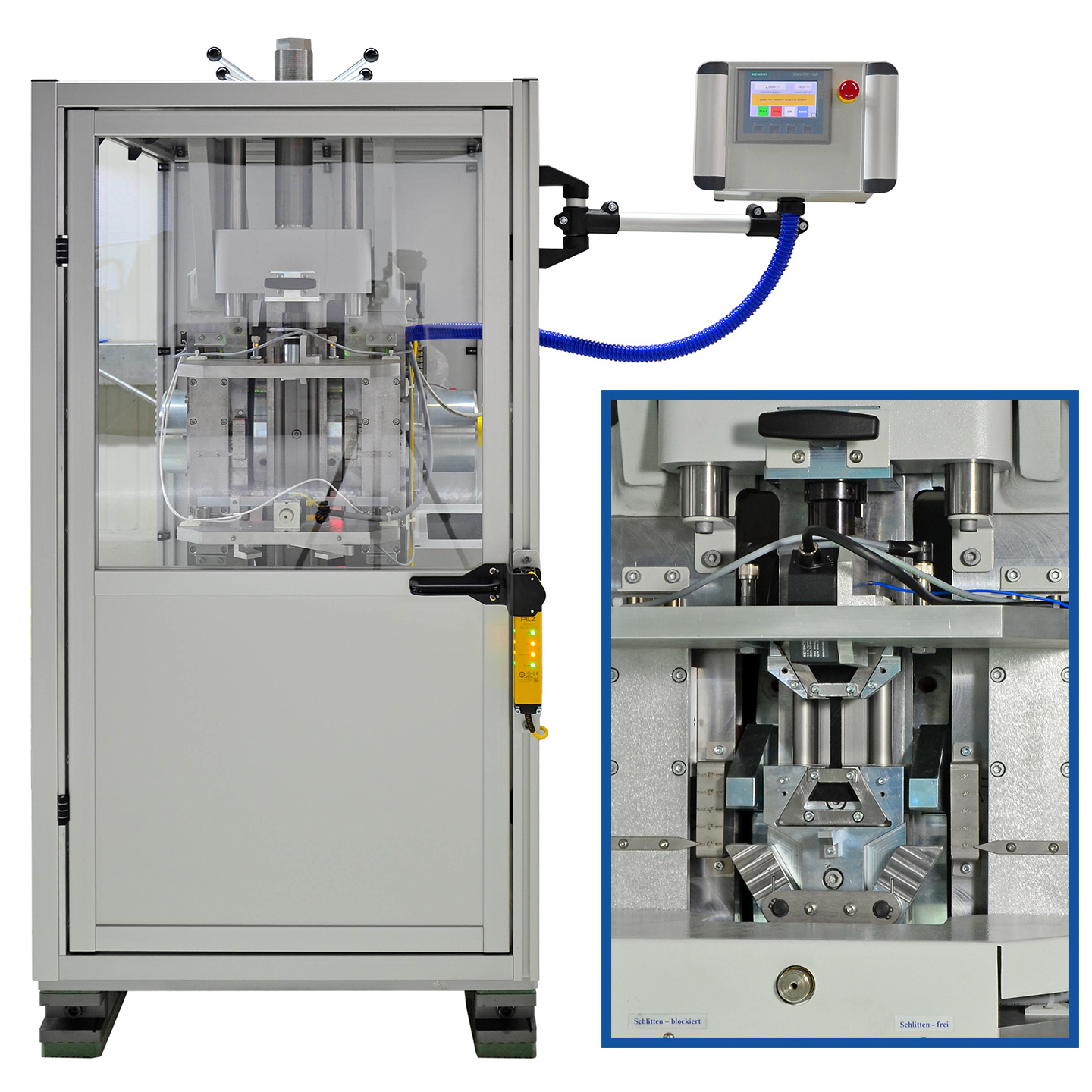
In the shear test, pure shear is achieved by attaching a square specimen to a shear frame, clamping it at the opposite edges and deforming it into a rhombus up to a defined displacement. The force curve over the entire stroke is recorded. The shear angle can then be calculated from the change in length of the diagonal.
The critical shear angle and the limit angle are usually used to evaluate the shear behaviour.
To determine the limit angle, the shear force shear angle curve is divided into a linear and a non-linear zone. The limit angle is defined at the transition from the linear to the non-linear range.