
Skip
Fibre Extrusion Technology Limited
Product: FET-200 Series

FET-200 Series

Fibre Extrusion Technology Limited

Description

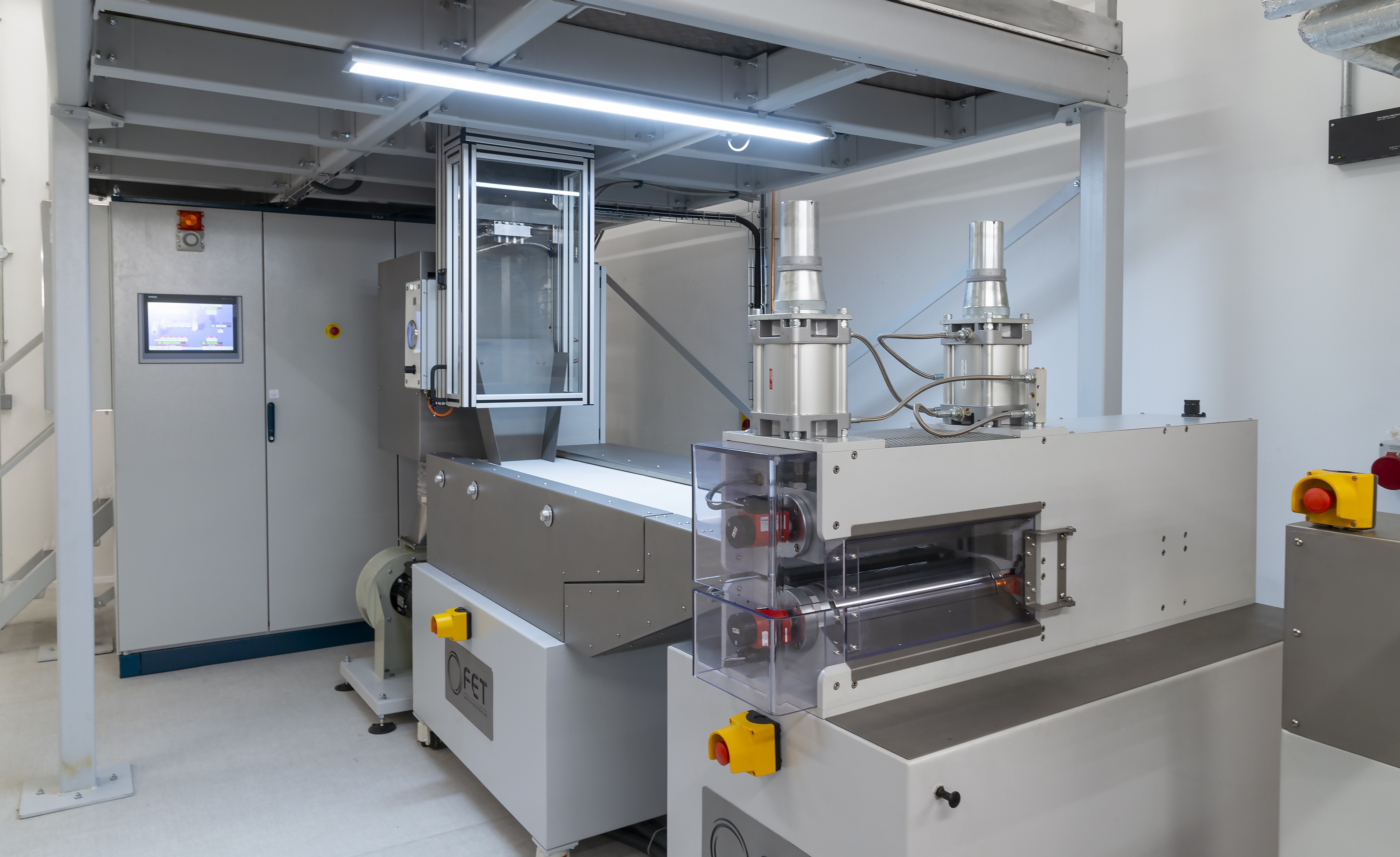
Pilot & small scale production wet spinning systems

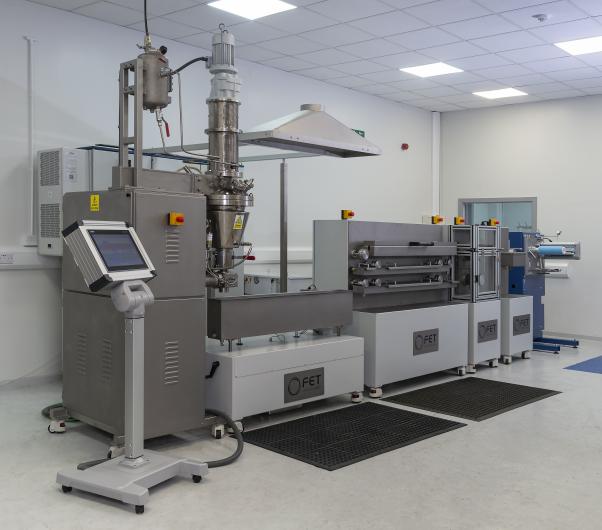
Where melt spinning solutions cannot succeed, FET provides a viable alternative with pilot and small scale production FET-200 Wet Spinning Systems. These may be used for a variety of solvent and polymer combinations:

  • Wet spinning for processing new functional textile materials
  • Allows maximisation of polymer and hence fibre properties
  • Optimisation of process conditions for transfer to large scale
  • Small scale production for bespoke high value products
  • Available for multifilament, monofilament and staple fibre formats

The FET-200 Series is available for multifilament, monofilament and fibre in both laboratory and pilot scale. With many high performance applications, such as biomedical and composites, these systems are proven and successfully operating worldwide.

FET-200 Features and Benefits:

  • Single or multiple dope vessels of various sizes for batch / continuous operation
  • Continuous homogenization of spin dope with temperature control
  • Exchangeable precision spin pumps and height adjustable spin engine
  • Horizontal, vertical spinning in the coagulation bath, with unique thread-up system
  • Temperature control of coagulation and solvent recovery
  • Highly efficient washing haul-off systems
  • Numerous combinations of washing baths available
  • Filament drying systems with hot air circulation
  • Flexible configuration of draw line components with multiple drawing zones
  • State of the art computerised control system with data acquisition

Dry-jet wet spinning method

This method, also known as gel spinning, is an alternative to wet spinning. Some fibres, when spun directing into the bath, may create micro-voids that negatively affect the fibre properties. The polymer is dissolved in a solvent to make the fibre solution, which is then extruded under heat and pressure into an air gap before it enters a coagulation bath. The produced fibre is then washed and dried before it is heat treated and drawn. This method is often required for high performance fibres with a liquid crystal structure

Vertical wet spinning method

In the past, wet spinning has always been conducted by submersing the spinneret into the solution and conducting the extrusion horizontally. However, at FET, we have recently developed a vertical spinning system. This line utilises the Venturi effect to allow for better exposure of coagulation media with the dope and easier threading up of the yarn. This is particularly useful when working with more challenging coagulation solutions such as concentrated sulphuric acid or highly basic solutions.

All FET-200 Wet spinning systems are tailor made and take into account required throughput polymer/solvent combination and downstream process conditions.

FET-200 LAB

Laboratory scale wet spinning systems

In addition to pilot and small scale wet spinning production lines, FET now also designs and manufactures a lab scale version which is more suitable for the early stages of formulation and process development.

Systems can be supplied for a wide range of different fibre types. These have ranged from corrosive aqueous salt solutions (such as alginate fibres), to acidic systems (such as engineered silk) and also systems using flammable solvents.
More products by Fibre Extrusion Technology Limited

Laboratory and Pilot Bespoke Systems

Laboratory and Pilot Bespoke Systems

Bespoke Laboratory and Pilot Equipment for Polymer Extrusion

In recent years, FET has become increasingly focused on the field of hi-tech laboratory and pilot machinery. We excel in finding solutions for challenging projects, working with customers and getting to understand the fine details of what they are seeking to achieve. Our background in providing bespoke extrusion lines for manufacturing systems gives us a broad understanding of processes, configurations and operation – elements that can then be practically applied to pilot and laboratory extrusion equipment.

FET laboratory and pilot bespoke systems

Our Laboratory and Pilot Melt Spinning Extrusion Lines are highly specialised and versatile systems that are designed and built to meet the needs of the most demanding research and development teams in the world. They are supplied as self-contained units for ease of installation in a laboratory and/or small scale process evaluation environment. A variety of options are available:-

  • Variety of polymer types
  • All combinations of yarn types – UDY, POY, FOY
  • Multifilament, Monofilament and Non-Woven versions
  • Mono, Bi and Tri-Component technology
  • High speed versions up to 6,000 m/m
  • High temperature versions
  • Corrosion resistant versions for special polymers
  • Fully integrated computer control system for data logging, trending and storage
  • Equipment for additive dosing of extruded polymers

Applications

FET Laboratory Extrusion Lines are suited to a variety of end uses:

  • R&D concept testing
  • Product development
  • Polymer and additive testing
  • Small batch production
  • New yarn engineering
  • Bio Medical yarns
  • Risk elimination
  • Additive testing

All extrusion lines allow for a high level of bespoke specification to satisfy exacting laboratory conditions. They are ideal for precision melt spinning of exotic polymers and small batch production for medical device applications


FET-100 Series

FET-100 Series

Multi-Functional Laboratory Pilot Melt Spinning Systems

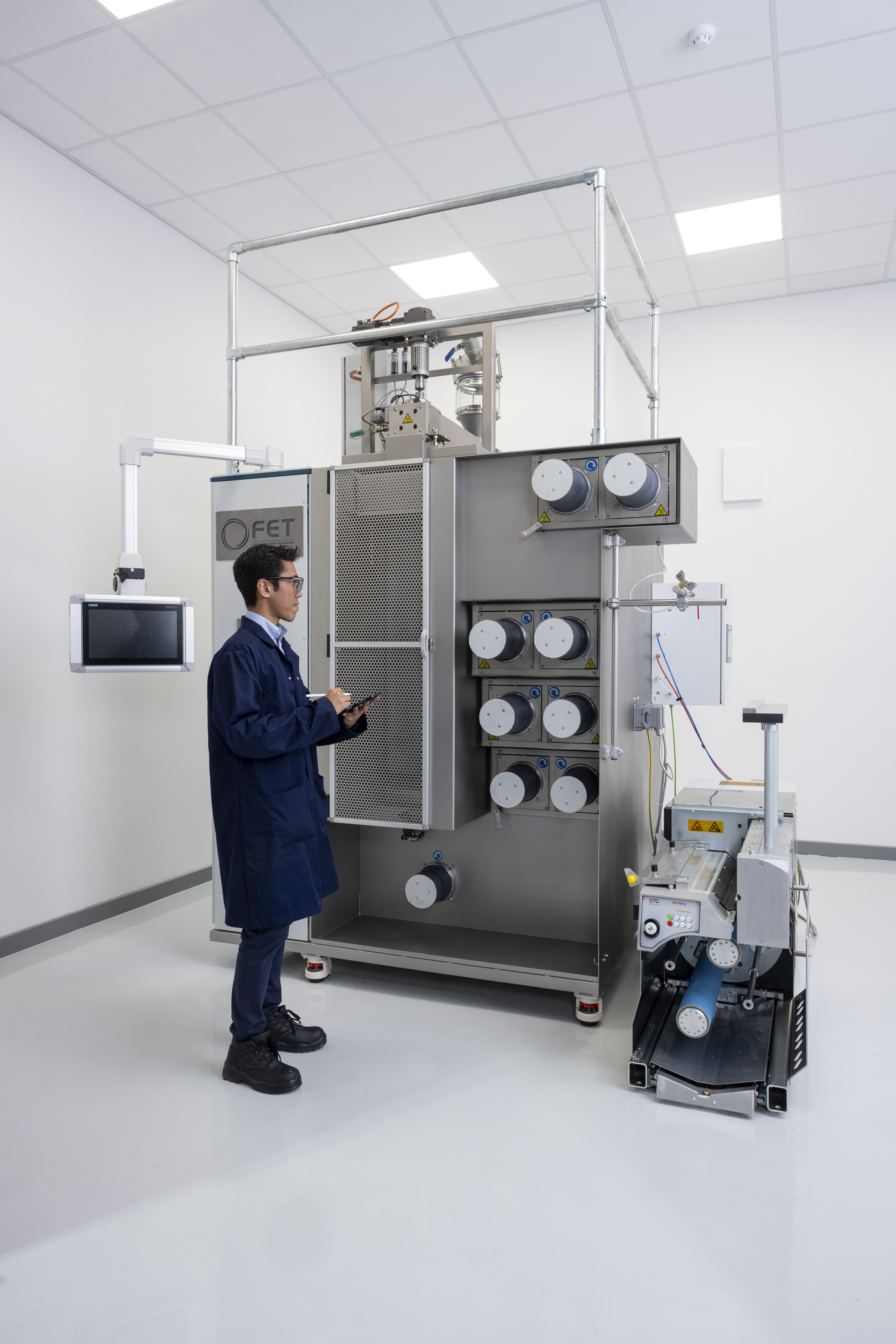
A significant feature is that FET-100 systems can be specified to be multi-functional, allowing for easy and fast conversion between material formats. It configures to all combinations of multifilament, monofilament and melt spinning of nonwoven structures as required.

This highly versatile and flexible system is ideal for research and development, designed specifically for detailed investigation into extruded textile materials. The FET-100 Series comprises the following modules:

FET-100 Extrusion

Central to all FET laboratory and pilot melt spinning systems is the specially developed extrusion module, the FET-100 Extrusion which allows multiple process options. This extrusion module is designed to provide melt spinning capacity to any one of the three downstream process options. The module is mounted on a hydraulic lifting table which permits automated adjustment of the working height

FET-101 Multifilament

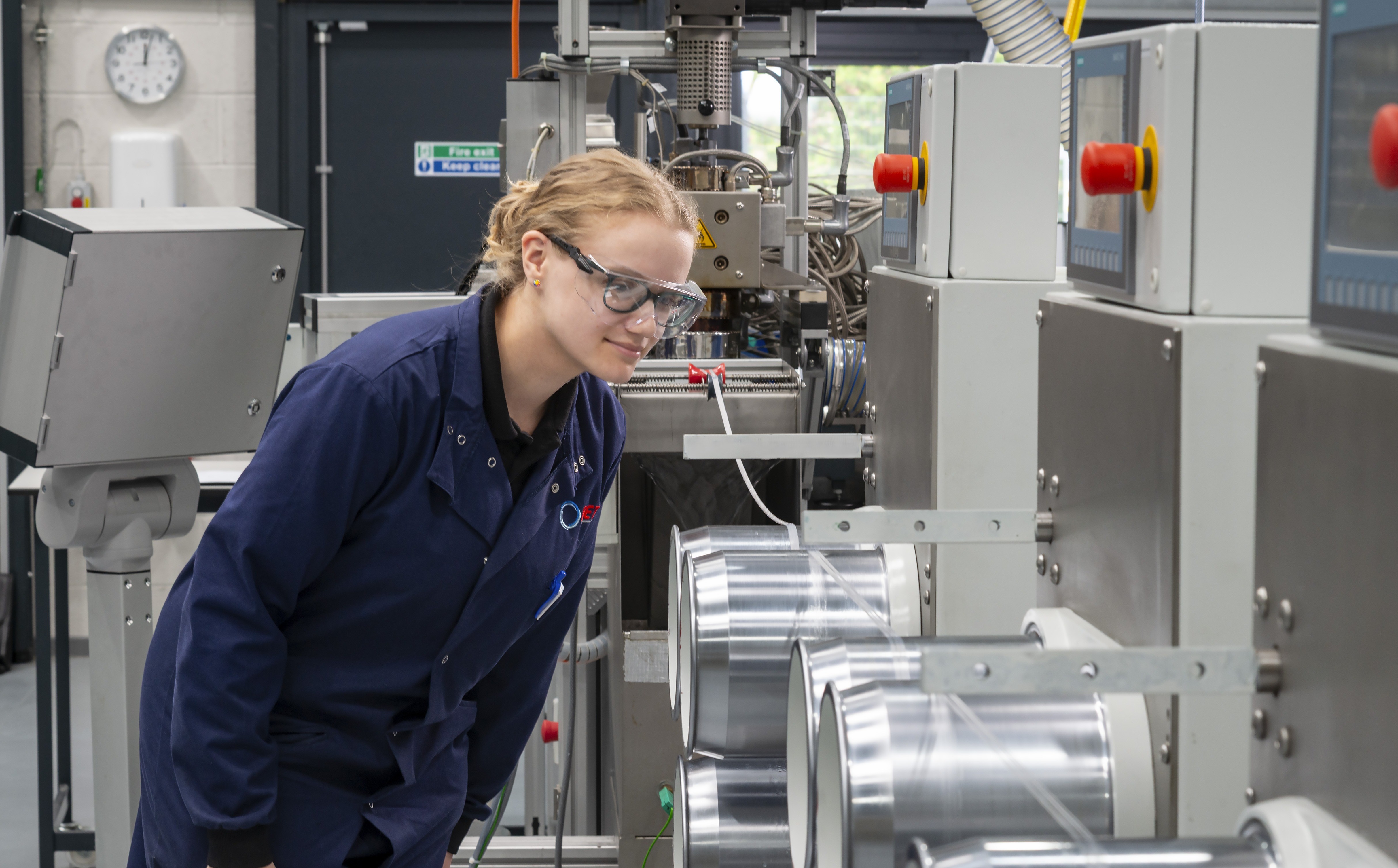
FET offers a wide range of bespoke pilot and laboratory melt spinning systems for continuous multifilament applications capable of matching the demands of all users. Each variation of the FET-101 Multifilament option is uniquely specified and designed for world leading companies and research institutes for a wide variety of applications.

FET-102 Nonwoven

Simple integration of the FET-102 Nonwoven option gives the possibility of melt spinning nonwoven materials. Melt blown and spun bond types can both be achieved on the same base system. This is applicable to a broad range of polymers, including viscous materials normally not appropriate for the melt blowing or spun bond process. Applications include resorbable biomedical polymers and engineering grade materials.

FET-103 Monofilament

Utilising the same extrusion module, FET can also provide specialist laboratory and pilot melt spinning systems for monofilament applications, the FET-100 monofilament. As with multifilament equipment, our flexible monofilament systems are being used by high tech organisations and research institutes on a variety of technical and R&D projects

Benefits include substantial savings on cost, floor space and also the ability to add optional equipment in the future. Extrusion module options include multi-polymer capability, bi-component and tri-component and can be specified for high temperature capability and corrosion resistant construction.


FET-500 Series

FET-500 Series

Gel Spinning Systems for Ultra High Molecular Weight Polymers

In recent years, there has been a growing demand for research and development of UHMWPE fibres. These fibres are prized in many industries due to their extraordinary properties; however, current production processes are complex and focused on the large-scale output of existing fibre grades. This rigid supply chain has stifled innovation in this untapped product market.

FET is launching the FET-500 series of gel spinning systems to address this market gap. The FET-500 enables a flexible and consistent process, capable of quickly producing quality, while avoiding the harsh processing chemicals historically associated with gel spinning.

Lab, Pilot, and small-scale Gel spinning systems

The FET-500 series of equipment is capable of processing UHMWPE in a medically safe processing oil, without using toxic solvents at any stage of the process. The unique flexibility of the FET process allows the FET-500 to be designed to suit consumer needs in terms of floorspace, production capacity, additive processing(colourants, fillers, etc.), and research aims.

Gel extrusion

The FET-500 extrusion system features an extended twin-screw extruder, capable of processing UHMWPE powder, oil, and additives in-situ. There is no need for pre-mixing, allowing for the online optimisation of component dosing and gel quality. FET’s in-house designed spinnerets support a wide array of filament counts and sizes, mimicking many existing grades and unlocking new and unexplored gel fibre constructions.

Oil extraction

The key to unlocking lab and pilot scale flexibility is the use of supercritical carbon dioxide as a green solvent in a patent-pending process. Processing oils are extracted from the gel fibres in a batch system using CO2 as a green, non-toxic, non-flammable, safe solvent. This plug-and-play system, developed and patented by FET, is simple to operate and simple to scale, supporting rapid and flexible new product development as well as small-scale production of valuable new UHMWPE fibre products.

Final yarn orientation

After removing oil from the gel fibres, the polymer yarn is stretched under heat to form the final high tenacity product. The FET process relies on the use of high-precision heated godet rollers, rather than large and inefficient hot air ovens, reducing the factory footprint and increasing rapid flexibility for the user.

Yarn Characteristics

With less than 100g of UHMWPE, new and valuable products can be made. The typical capability range of the FET-500 allows for the reproduction and optimisation of existing yarn grades in a very broad range:

· 1-150+ filaments

· 1.2-5+ denier per filament

· Up to >40 g/den tenacity

· 1-5+% elongation

· A wide array of colours, additives, and fillers

· 0-200+ twists per metre