
NIPS-T Qualitycontrollsystem for Garment Manufacturer
Description
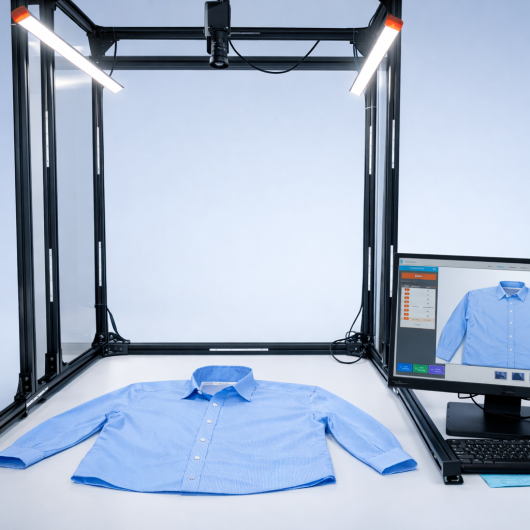
NIPS-T (NIPS-Table) is an optical textile inspection system with AI-supported evaluation function. The key difference is that the garments are presented on a table instead of on a 360° conveyor belt. This makes NIPS-T ideal for production-related inspection processes. NIPS-T is specifically designed for quality control after manufacturing or after individual production steps.
Automated control system for quality control after production
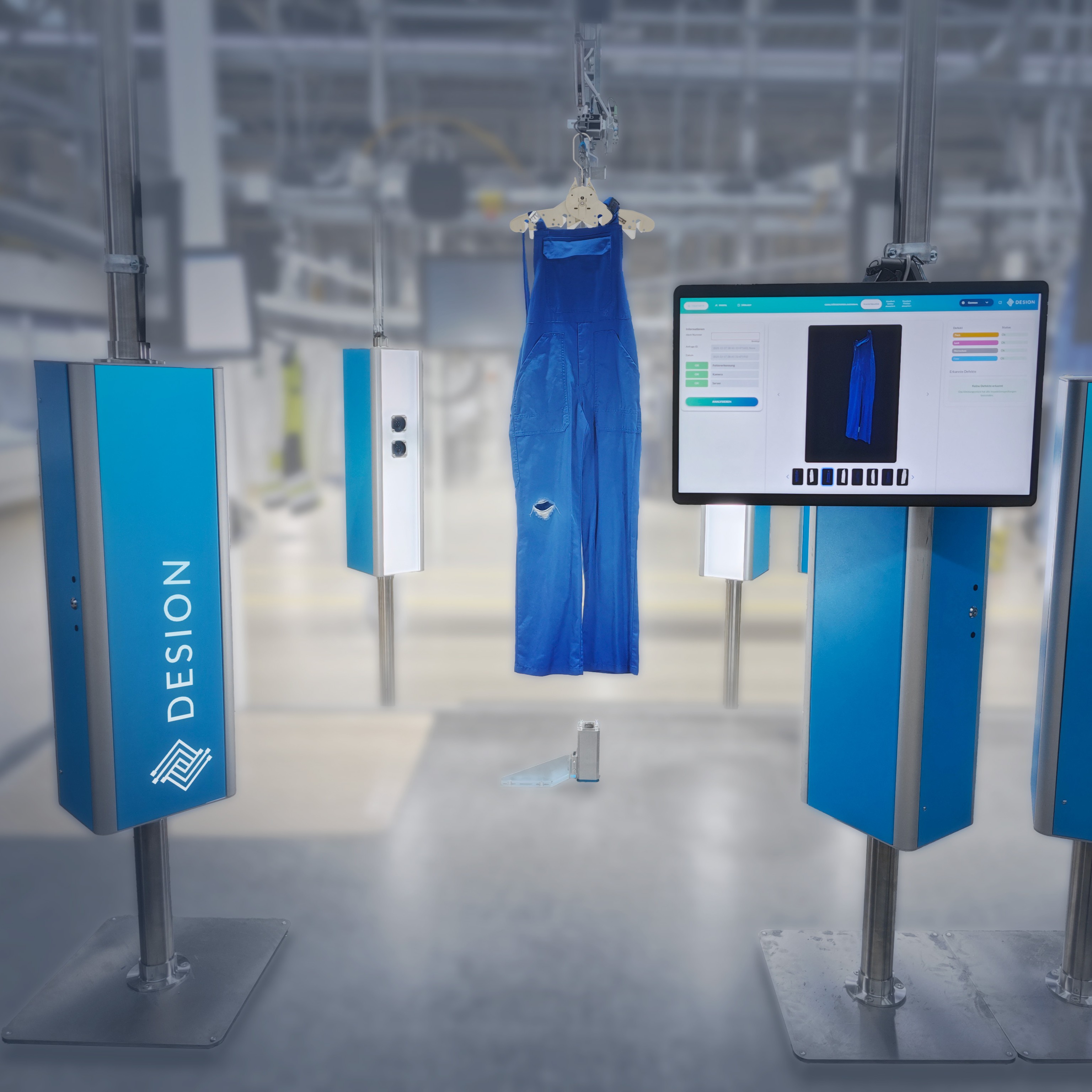
NIPS-T automates the previously manual visual inspection. The standardized control process avoids subjective quality assessments and the associated human errors. With the help of high-resolution cameras, special lighting, and AI algorithms, garments and critical areas are analyzed and checked with a high degree of reliability according to defined quality criteria. Test results are digitally documented and integrated into existing IT/ERP processes via interfaces so that they can be used for rework, rejection, and process optimization.
What can NIPS-T detect?
NIPS-T is particularly effective at detecting seam-related quality deviations such as seam interruptions, open or unraveled seams, missing stitches, and uneven stitch patterns. It also identifies typical seam defects such as seam misalignment, wrinkles/ripples along the seam, damaged seam areas, and critical zones at transitions and stress points. Depending on the configuration, NIPS-T can also detect other defects such as stains, holes/tears, material or surface irregularities, and contamination.
What can it be used for?
NIPS-T is suitable for end-of-line inspections after production as well as for random or 100% inspections before packaging and shipping. It can also be used for inline quality assurance after critical work steps (e.g., sewing, attaching pockets/reinforcements, applications) in order to trigger rework at an early stage.
What does our technology do?
NIPS-T delivers consistent, standardized inspection quality—regardless of fatigue or experience of the inspection staff. Quality rules (tolerances, error classes, product groups) can be customized so that the system can be adapted to different items and standards. The garment is positioned on the NIPS table for inspection, and the camera system then captures the relevant areas in consistent image quality. The image data is transferred in real time to the evaluation software, which marks and classifies any anomalies. This results in traceable inspection decisions, including documentation (e.g., image storage/markings).