
Skip
Techtextil News

Stay up to date and don’t miss any news about Techtextil. Our newsletter provides you with the latest information and practical tips for your visit to the fair.

Exhibitors & products at Techtextil 2024

The exhibitors & products at Techtextil 2026 will be available here from mid-January 2026.

Luwa Air Engineering AG

Axial Flow Fan B800CF with Carbon Fibre Blades
Trade fair innovation

Axial Flow Fan B800CF with Carbon Fibre Blades

Luwa Air Engineering AG

Description

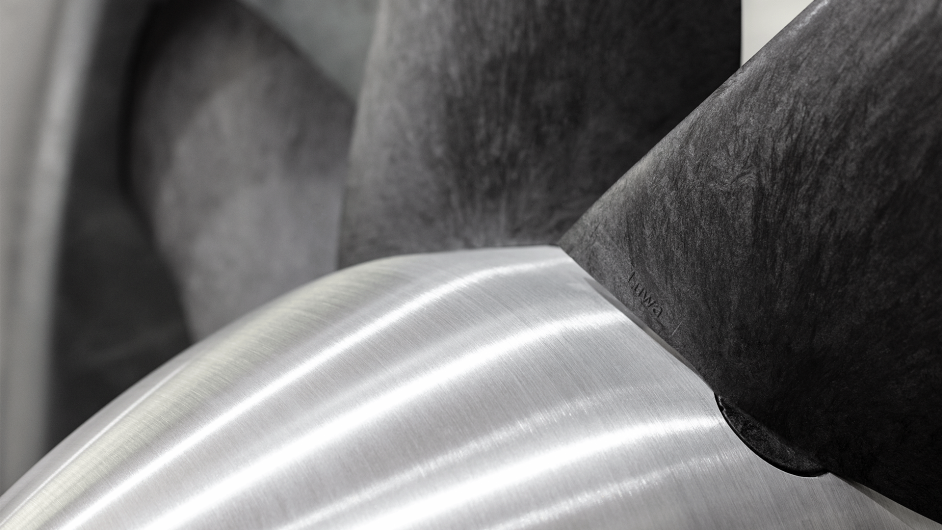
The fan blades of the new Axial Flow Fan B800CF are made of the very light and high-strength
“Hybrid Long-Carbon Fibre-Compound” (LCF) material. Compared to aluminum fans, LCF material allows new possibilities in design:
- larger blades,
- wider chord lengths at lower weight and
- lower mechanical stresses and thus
- more usable aerodynamic surface on the blade.

Benefits & Features
- Improved aerodynamics / efficiency
- Best performance and efficiency in typical P/V working ranges for industrial fans in textile air conditioning systems
- Designed for a wider operating range with consistently high energy efficiency
even under changing operating and pressure conditions
(e.g. condition and aging of filter media, changing number of running machines, etc.).

Increased performance
The impeller with its characteristic sickle-shaped blades is designed for optimal aerodynamic performance and most efficient operation. The use of high-quality materials and modern production methods allow for the unique shape of the blades – a factor that contributes signifficantly to the outstanding performance of the Axial Flow Fan with carbon fibre blades.
The benefits of the Luwa Axial Flow Fan series B800CF are reduced power consumption, higher fan performance, lower weight and reduced noise level.

More products by Luwa Air Engineering AG

Digital Solutions

In today's rapidly changing landscape, adaptability is essential for success. This is particularly relevant in industries like textiles, where staying ahead requires constant innovation. Textile mill owners and operators can face a number of challenges in managing their air systems. These challenges, if ignored, can significantly impact productivity and profitability.

Identifying Pain Points

  • Downtime Costs: One of the most significant challenges for textile mill owners is the significant cost of downtime. Any disruption in air system performance can lead to production delays and increased operational expenses.
  • Lack of Real-time Insights: Traditional systems fall short in delivering real-time data on textile air system performance. This deficiency makes it challenging to promptly identify issues and make informed decisions.
  • Inefficient Maintenance: The practice of reactive maintenance is both expensive and disruptive. Mill owners often struggle to plan and execute maintenance activities effectively.
  • Quality Control Challenges: Maintaining consistent conditions, such as humidity and temperature, is crucial for yarn quality. Deviations from optimal parameters can adversely affect product quality.
  • Dependence on On-site Personnel: Sole reliance on on-site personnel for system operation can be challenging, particularly in finding and retaining qualified staff.

Luwa´s Digital Solutions

Luwa's digital solutions are meticulously designed to address these pain points effectively. They unlock the value within data by providing critical indicators of textile air system performance in an accessible way. These solutions are adeptly tailored to meet the distinct requirements of each customer, ensuring that mill owners, managers, and operators can efficiently control, monitor, and maintain their textile air systems.

Key Features

CONTROL (DigiControl 7)

The CONTROL package is at the core of Luwa's digital solution suite. It empowers textile mill operators with real-time control and automation capabilities, ensuring stable production conditions. With the added convenience of easy access from any browser within the same network for up to five users, this package offers a dependable and user-friendly platform for local textile air system management.

ANALYZE & REPORT (Luwa Insight)

Luwa Insight elevates data management to the next level. It enables remote monitoring, data analysis, and cross-site data comparison. This package empowers textile mill owners to identify trends, forecast maintenance requirements, and make data-driven decisions.

EXTENDED SERVICES (Luwa Assist)

For those seeking additional support, Luwa Assist extends a helping hand, offering expert guidance in data analysis and recommendations. This service ensures that you extract the utmost value from Luwa's digital solutions.

Trade fair innovation

Multi Cell Filter MCV

The MultiCell filter is built up as a filter wall in air conditioning stations for the filtration of return air, which is contaminated with dust and fibers. The special design with bottom entry filter cells prevents clogging of the filter with fibrous material:

  • Smaller service bay
  • Shorter A/C stations
  • Fast and easy change of filter medium
  • Increased filter surface for energy saving
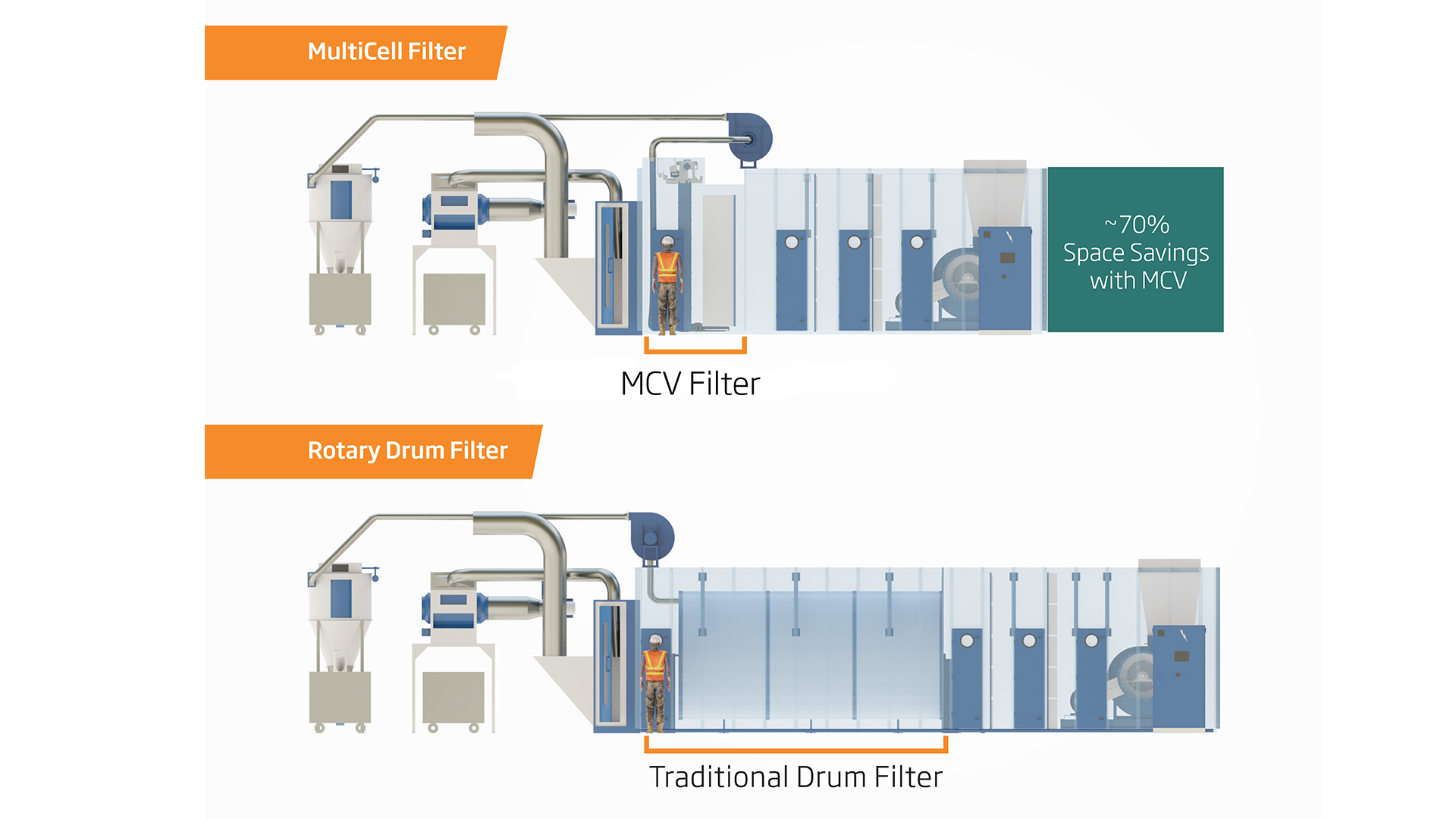
  • Only 1/3 of the space required compared to rotary filters
  • Simple and sturdy 2-axis movement drive of suction nozzle

For decades the rotary air filter has been proven to be the best fit for all kinds of filtration applications in the textile industry. Its sturdy and simple design facilitated outstanding performance. The disadvantage of rotary air filters is their big space requirement, which leads to higher initial cost. In today’s competitive business the economical utilization of building space is a substantial factor in overall investment costs.

Luwa has developed the next generation of automatic air filters for a wide range of applications in the textile industry, with three main objectives: Simple and robust design, small footprint and reduced power consumption.

The new MultiCell Filter MCV is build up on these three objectives:

  • Simple static and slim filter wall in V-Shape for maximum filtration surface area
  • Simplified 2-axis suction robot with only two gear motors
  • Large filter surface area for reduced power consumption

Traditional drum filters are approximately 11m. The MCV filter is 3.5m in size, providing ~70% space savings over traditional drum filters with the same efficiency.